What happened
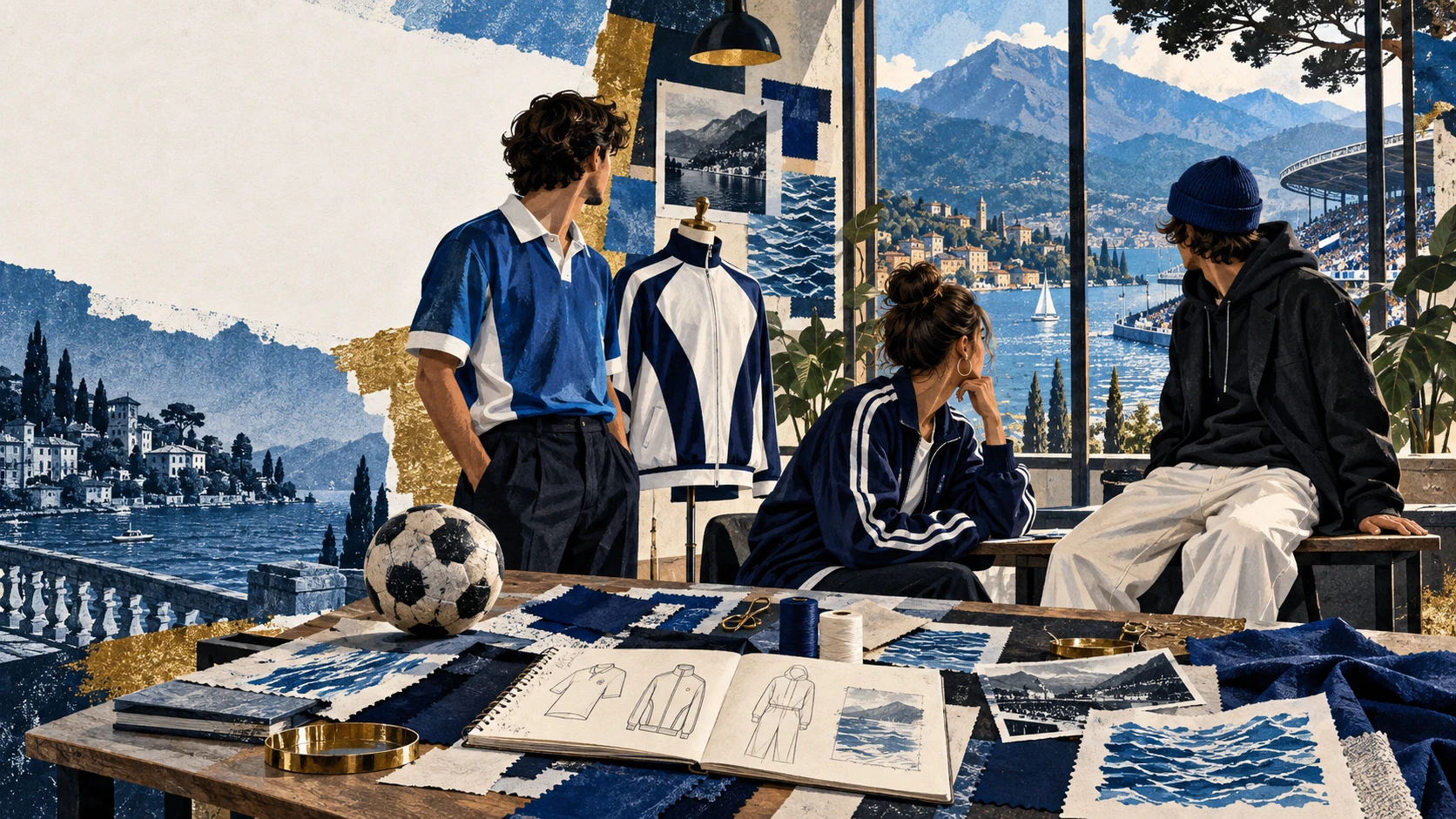
The clearest starting point came in 2022. High-fashion designer Didit Hediprasetyo commissioned artist Golnaz Jebelli to paint the movement of Lake Como’s water and the strength of marble, then carried those textures into the home kit. It was already a different way to make a shirt: begin with an artwork and a place, rather than decorate a standard template after the fact.
The project also tried to connect design with responsibility. The club said profits from the playing shirts would support community projects and promised to keep the kit for at least two seasons, specifically acknowledging the cost to parents when clubs replace shirts every year. That principle mattered as much as the lake pattern. It treated a kit as something supporters live with, not disposable seasonal content.
The next phase arrived with Rhuigi Villaseñor, founder of RHUDE and a former Bally creative director, who became Como’s chief brand officer in 2024. “I’ve always been drawn to places that have a rich sense of history and style,” he said when explaining the attraction of Lake Como. Under his direction, the club’s visual world has expanded through adidas lifestyle pieces, the Crest Collection, RHUDE collaborations, limited fourth shirts and launches staged more like fashion drops than catalogue updates.
Why the clothes feel different
The black-and-gold RHUDE x adidas fourth shirt linked Lake Como with Los Angeles and marked the club’s return to Serie A. The current Sticker Collection works from a different archive: old tickets, season cards and supporter graphics. The 2026/27 away shirt returns to classic football language with fine tonal stripes, a proper collar and the adidas Trefoil. Different looks, but the same method—start with a recognizable piece of Como, then make it wearable now.
Even the campaign work understands the product. For the new away shirt, Da Cunha, Jesús Rodríguez, Couto, Ramon and Diao photographed the preseason trip on disposable cameras. That choice made the launch feel personal and imperfect in the right way. The shirt appeared in travel, waiting and friendship before it appeared under stadium lights.
Fashion has noticed the shift. Vogue called Como “a nascent crossover luxury brand.” When the magazine asked Villaseñor about the wider meeting of the two worlds, his answer was direct: “Since there’s so much talk of sports and fashion integrating, why not really fully integrate?” That is a useful description of Como’s approach. The club is treating fashion as part of its identity system, not as decoration added after the football work is finished.
This is where the younger appeal comes from. Como borrow the language of contemporary culture—drops, styling, creator credit, archive graphics and behind-the-scenes images—without abandoning the football shirt. There is no public age breakdown proving who buys each collection, so the club should not pretend design alone creates young supporters. But it gives a generation used to reading clothes as identity another doorway into Como.
The Como view
Plenty of clubs release lifestyle merchandise. Como’s advantage is that the story does not need to be invented in a marketing meeting. The city has a textile tradition, the stadium sits against one of the world’s most recognizable landscapes, and the club has designers willing to treat those facts as material rather than scenery.
Sempre Como Editorial Desk
The strongest work also moves in both directions. Fashion gives Como visibility beyond Serie A, while supporter memory prevents the fashion from becoming anonymous luxury sportswear. A saved ticket or an old crest carries more emotional weight than another generic premium hoodie. The clothes work when someone can ask what a detail means and find a real Como answer.
That is why “best-dressed” is more than praise for one beautiful kit. It describes the consistency of the idea. The match shirt, travel photography, jackets and archive graphics look as though they belong to the same club. Most football merchandise asks supporters to advertise a badge. Como’s best pieces let them wear a place and a point of view.
The price of being cool
The RHUDE x adidas fourth shirt was priced at €275. The Sticker Collection lists a €285 jacket and €89 T-shirts. Those are fashion prices, and they will be beyond the reach of many supporters—especially families already paying for tickets, travel and ordinary replica shirts.
That tension is especially interesting because Villaseñor has challenged the same problem himself. Discussing a lower-priced Zara project with Vogue in 2022, he asked, “How can the kids shop?” and argued that “really good design is a right.” Como’s premium drops now provide a fair test of that principle.
Scarcity can make a drop exciting, but it should never make the club’s visual identity feel reserved for collectors. Como’s earlier decision to keep a kit for more than one season offered a valuable counterpoint: style can be ambitious while the basic supporter relationship remains accessible.
The next challenge is therefore not to become more luxurious. It is to keep the same creative intelligence at several price levels: a special piece for collectors, a strong standard shirt, and simple objects younger supporters can actually afford. Cool lasts longer when people can participate in it.
Bottom line
Hediprasetyo and Jebelli began with the surface of the lake. Villaseñor brought a streetwear and luxury-fashion eye, then used adidas, RHUDE and Como’s own archive to widen the vocabulary. The result is a club image that can sit naturally in the Sinigaglia, a design studio or a city street.
That will appeal to people who encounter Como through clothes before they know the midfield. The opportunity is real: a striking shirt can start the conversation, and the football can deepen it. The club’s task is to make sure elegance remains an invitation rather than a velvet rope.